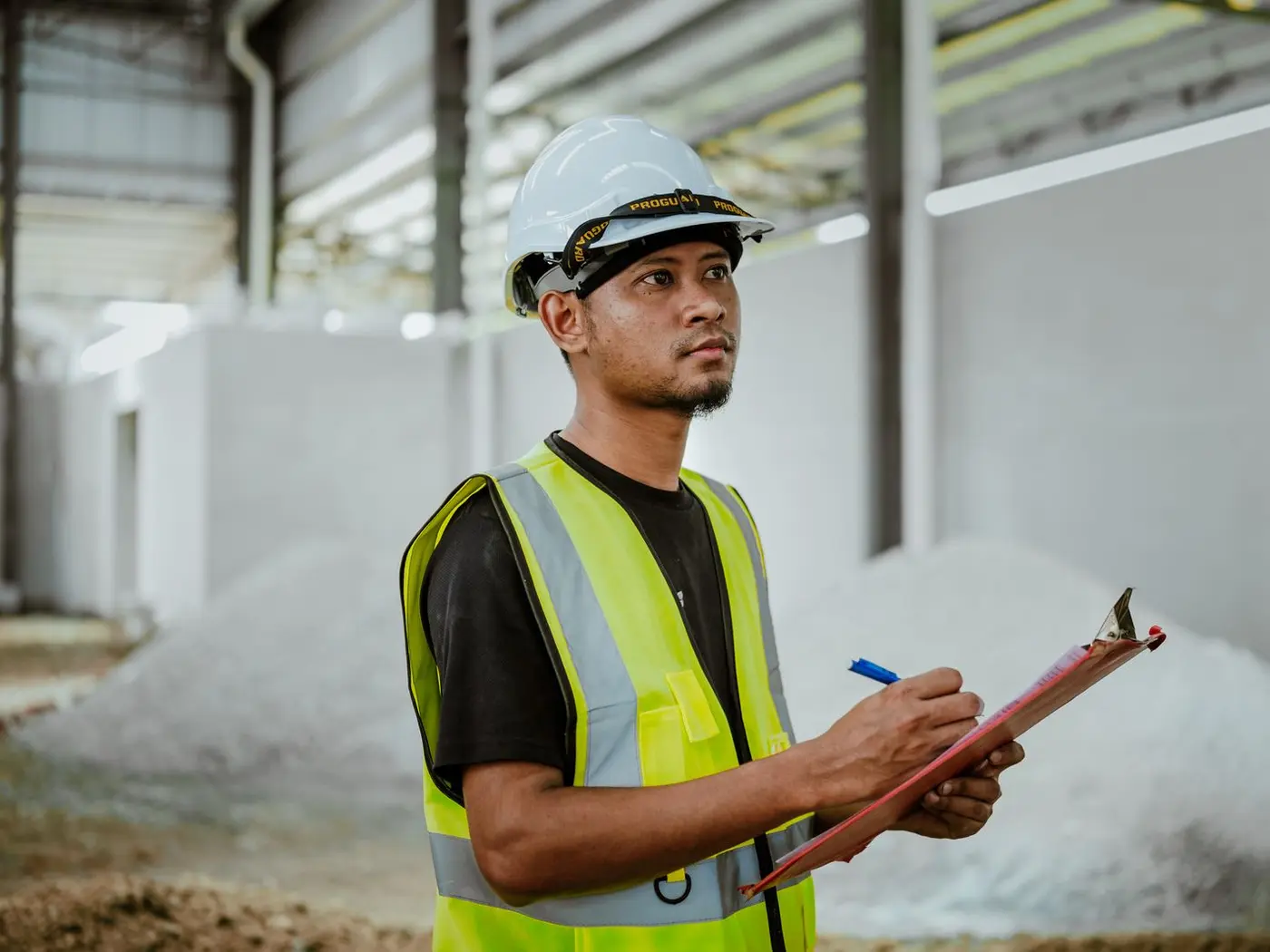
Mining recruitment challenges you will not find in other industries
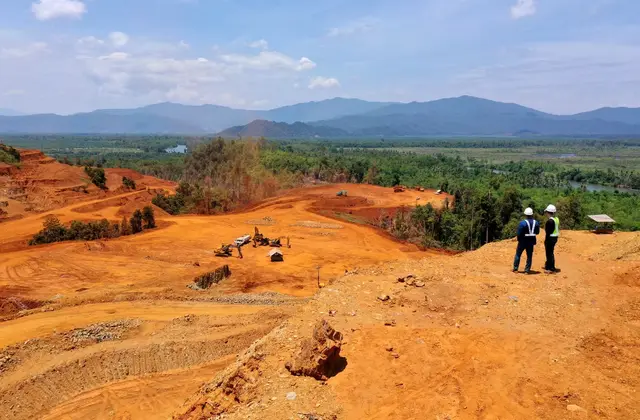
Hiring for a mine is not like hiring for an office. Sites are often far from the nearest city, candidates have to be willing to live in a mess (on-site accommodation), and the rotation pattern decides whether someone stays or resigns in month three. A polished CV does not answer the question that matters most: is this person ready to be posted far from home and to work safely in a high-risk environment.
Meanwhile, applicants can arrive in large numbers from many regions, while site needs often come up suddenly because of a new contract or an added shift. Good mining recruitment separates candidates who can prove their competence from those who only write it down, whether for operators, technicians, K3 (occupational health and safety) staff, or site support staff.
Challenges
Remote postings filter out interest
A candidate who looks good on paper may withdraw once they learn the location, the distance to town, and the conditions at the mess. Readiness for a remote posting should be asked early, not at the offer stage, so screening time is not wasted.
Rotation patterns affect retention
Rotation patterns differ by site and by contractor. Candidates with family obligations often reconsider once they understand the on-site and off-site schedule. Finding this mismatch in an initial interview costs far less than finding it after mobilization.
Certificates and licenses must be verified
Operators and K3 staff work with equipment and in areas that carry risk. SIM, SIO (heavy equipment operator permit), and K3 certifications need to be checked for type, validity period, and fit with the position. Always check the latest applicable regulations before setting requirements.
Candidates are spread across regions and contracts
Applicants come from many provinces, some from around the mine and some from other islands. Contractors also hire according to project contract periods, so demand rises and falls and HR has to be ready to screen without lowering safety standards.
The roles mining companies hire for most often
Coal mines, mineral mines, and service contractors need a mix of field, technical, and support roles. Here are the five roles opened most often, along with what to assess for each.
- 1
Heavy equipment operator
Assess the unit types they have operated, valid SIM and SIO, time worked in mining, and practical test results. Safe working habits matter more than speed.
- 2
Dump truck and hauling operator
Assess experience on mine haul roads, discipline about speed limits, ability to handle night shifts, and willingness to take a practical test and a health examination.
- 3
Safety officer and HSE
Assess K3 certification, experience with inspections and incident investigations, and the courage to stop unsafe work even under production target pressure.
- 4
Mechanic and equipment technician
Assess the brands and unit types they know, ability to read fault diagnoses, experience with scheduled maintenance, and discipline in following energy isolation procedures.
- 5
Site administration, logistics, and engineering staff
Assess experience working at a site or remote project, accuracy with documents and stock, command of planning software, and readiness to follow a rotation pattern.
From a pile of CVs to a shortlist
Illustrated flow: CVs come in, are screened against your criteria, and only the most relevant candidates move on to the next stage.
The old way
- CVs arrive in large numbers by email, WhatsApp, and labor agencies, then get opened one by one by a team that is also handling mobilization.
- Certificates, SIM, and experience are checked manually from attachments in different formats, so missing documents are often discovered only at the final stage.
- Readiness for site postings and rotation is asked about by phone, one candidate at a time, so the questions and the assessment differ from one interviewer to another.
With TalentRank
- Define the criteria for each position in Custom Hiring Criteria: unit types, SIM and SIO, K3 certification, and rotation readiness.
- Upload CVs in bulk to CV Screening AI, then receive a ranking and candidate summaries against those criteria.
- Send WhatsApp Prescreening to collect residence, rotation availability, and document status from candidates who pass.
- Run AI Interview with the same questions for every candidate, then review the scores and summaries. The final decision stays with the HR team.
CV screening criteria for mining recruitment
These criteria apply to most site positions. The weights can be adjusted per role: operators emphasize licenses and unit hours, while support staff emphasize posting readiness and accuracy.
| Criterion | Priority | Good signs in the CV | Worth asking about |
|---|---|---|---|
| Certificates and licenses matching the position | High | SIM, SIO, or K3 certification listed in full, with type, validity period, and an issuing body that fits the position. Check the latest applicable regulations. | A certificate that does not match the unit type, no validity period stated, or only the word certified with no details. |
| Experience at mine sites | High | Mine type, unit type or work area, and the duration of each posting are clearly stated and make sense chronologically. | Mining work history with no unit details, or very frequent contractor changes with no explanation. |
| Workplace safety record | High | Mentions inductions, inspections, hazard reporting, or examples of safe actions taken at a previous workplace. | No mention of safety at all in a work history that should be full of risk, or treating procedures as a formality. |
| Readiness for remote posting and rotation | High | Residence, family status, and willingness to live in a mess and follow the rotation pattern are documented from the CV or prescreening stage. | Asks for a posting near home for a role clearly based at a remote site, or hesitates when asked about the rotation pattern. |
| Willingness to undergo a health examination | Medium | The candidate is willing to take an MCU (medical check-up) according to company requirements. Medical fitness is decided by an authorized examiner, not by HR or AI. | Avoids or refuses a health examination without explanation, even though the role demands a certain level of physical fitness. |
| Reason for leaving and work references | Medium | The reason for leaving a previous contract is plausible, for example a project contract ending, and a supervisor reference can be reached. | Often quits mid-contract without a reason, or references cannot be reached. |
Certificates and licenses matching the position
HighGood signs in the CV: SIM, SIO, or K3 certification listed in full, with type, validity period, and an issuing body that fits the position. Check the latest applicable regulations.
Worth asking about: A certificate that does not match the unit type, no validity period stated, or only the word certified with no details.
Experience at mine sites
HighGood signs in the CV: Mine type, unit type or work area, and the duration of each posting are clearly stated and make sense chronologically.
Worth asking about: Mining work history with no unit details, or very frequent contractor changes with no explanation.
Workplace safety record
HighGood signs in the CV: Mentions inductions, inspections, hazard reporting, or examples of safe actions taken at a previous workplace.
Worth asking about: No mention of safety at all in a work history that should be full of risk, or treating procedures as a formality.
Readiness for remote posting and rotation
HighGood signs in the CV: Residence, family status, and willingness to live in a mess and follow the rotation pattern are documented from the CV or prescreening stage.
Worth asking about: Asks for a posting near home for a role clearly based at a remote site, or hesitates when asked about the rotation pattern.
Willingness to undergo a health examination
MediumGood signs in the CV: The candidate is willing to take an MCU (medical check-up) according to company requirements. Medical fitness is decided by an authorized examiner, not by HR or AI.
Worth asking about: Avoids or refuses a health examination without explanation, even though the role demands a certain level of physical fitness.
Reason for leaving and work references
MediumGood signs in the CV: The reason for leaving a previous contract is plausible, for example a project contract ending, and a supervisor reference can be reached.
Worth asking about: Often quits mid-contract without a reason, or references cannot be reached.
Sample interview questions for mining recruitment
The questions below are split into three groups. Ask every candidate for the same position the same questions so the answers can be compared, then probe answers that are too short or too generic.
Site readiness and rotation
1.The rotation pattern at our site is fairly long. How does your family feel about it?
A good answer: Tests whether the candidate has discussed the rotation with their family, since resistance at home is often the reason people leave early.
2.Tell me about the longest time you have lived in a mess or camp far from the city.
A good answer: Reveals real experience of living at a remote location, not just a statement of readiness.
3.What is the earliest you could be mobilized, and which documents are still incomplete?
A good answer: Surfaces administrative obstacles before the offer, so the mobilization schedule is more realistic.
Work safety
4.Have you ever stopped work because you felt it was unsafe? What happened afterward?
A good answer: Assesses willingness to act and how the candidate handles production target pressure.
5.How do you check the condition of your unit or work area before a shift starts?
A good answer: A detailed answer shows a real checking habit, not a memorized procedure.
6.Describe a near miss you witnessed and what you reported.
A good answer: Shows honesty and the habit of reporting rather than hiding incidents.
Technical competence and experience
7.Which units have you handled, at what type of mine, and for how long?
A good answer: Matches their experience to the units and terrain available at your site.
8.What is the hardest technical problem you have faced in the field, and how did you solve it?
A good answer: Shows depth of experience and how they think when conditions are not standard.
9.If you were asked to take a practical test tomorrow, which part are you most likely to get wrong?
A good answer: This question shows how honestly the candidate assesses their own ability.
Common mistakes
- 01
Checking certificates only at the offer stage
The candidate is already scheduled for mobilization when someone finds the SIO does not match the unit or has expired. Check documents early and keep a completeness record for each candidate.
- 02
Asking about location and rotation too late
Many candidates withdraw after learning the posting details. Be honest about the location, rotation pattern, and mess conditions from prescreening, so the people who continue already understand what they are signing up for.
- 03
Judging operators only by years of experience
Time on the job is not the same as safe habits. Pair the CV review with a practical test and questions about safety behavior before deciding.
- 04
Using different criteria for different regions
Applicants from the area around the mine are often judged more leniently, while applicants from other islands are judged more strictly. Use one rubric per position so assessments are fair and defensible.
- 05
Ignoring changing contractor demand
Contractor headcount follows the contracts currently running. Without a pool of already screened candidates, the team has to restart selection from scratch every time a unit or shift is added.
Scenario
Company
A coal mining contractor that has won a new contract and needs to add operators, K3 staff, and site administration staff.
Situation
Hundreds of applicants from many provinces arrive within a few days, while the mobilization schedule has already been set by the client. The HR team is small and cannot read every CV while also handling departure preparations.
Expected outcome
HR spends time only on candidates whose documents are complete and who have said they are ready for rotation, so practical tests and MCUs are scheduled for a more curated list.
- 1HR builds a rubric for each position: unit types, SIM and SIO, K3 certification, and rotation readiness.
- 2All CVs are uploaded to CV Screening AI, which produces a ranking and summaries for each position.
- 3Top candidates receive a WhatsApp Prescreening with questions on residence, rotation, and document completeness.
- 4Candidates who pass go through AI Interview, then HR reviews the scores and summaries before the practical test and MCU.
What you get
- Candidate ranking per position
- Summary of certificates and site experience
- Answers on rotation and posting readiness
- Initial interview scores with an HR summary