
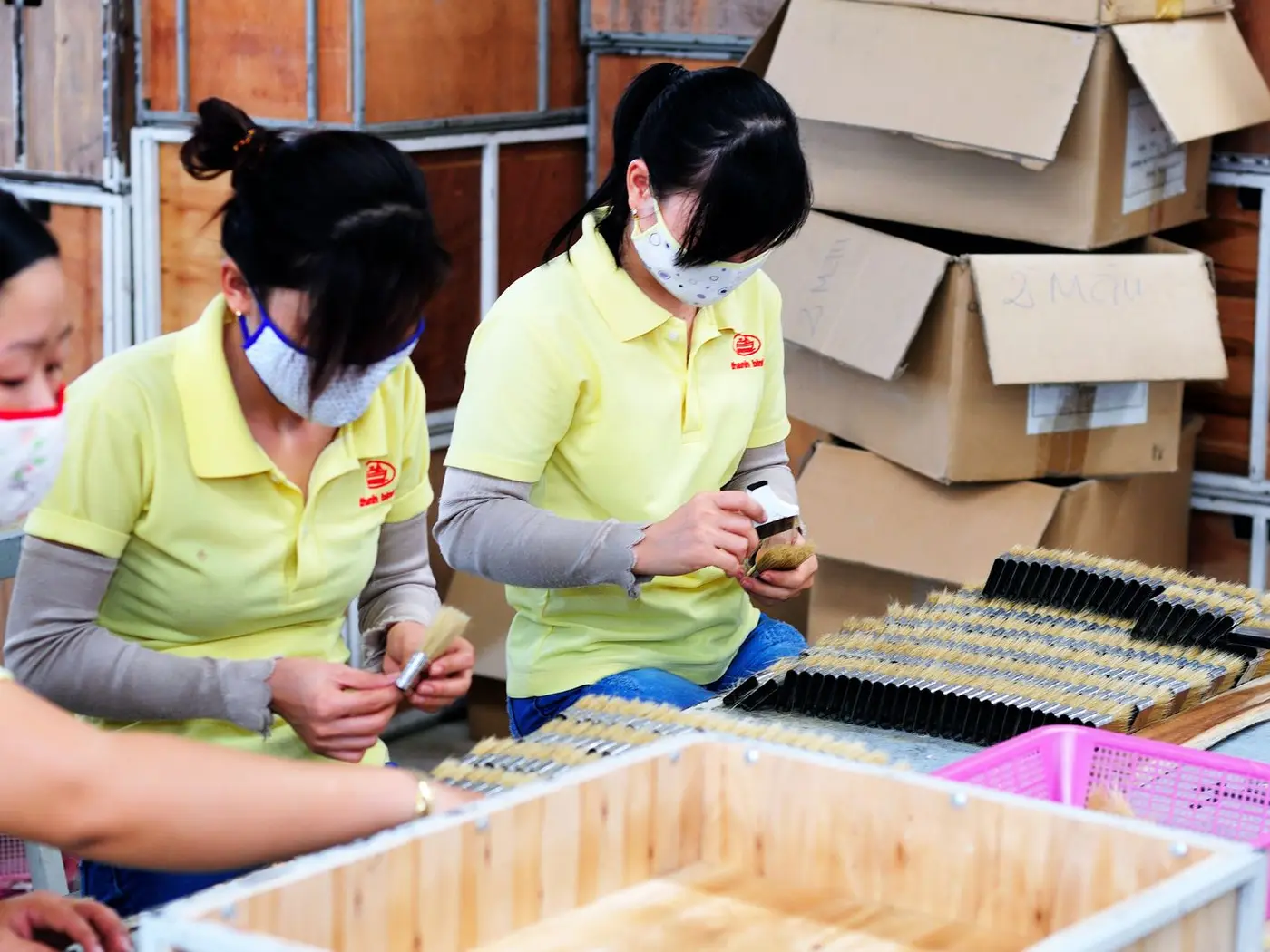
FMCG recruitment: why field teams are hard to fill and quick to leak
FMCG companies rarely lack applicants. The hard part is filling a position in a specific region, at a specific time, with someone who can visit dozens of stores in a day. A single salesman opening in a mid-sized city can draw hundreds of CVs, yet only some of those candidates have a vehicle, know the routes, and are ready for weekly targets.
Because field roles turn over quickly, FMCG HR teams almost always hire while patching gaps. Candidates arrive in waves from many branches, distributors, and agencies, under standards that may differ from one area to the next. Without a shared rubric, team quality depends on whoever happened to screen CVs that day, not on what the role actually requires.
Challenges
High application volume spread across many areas
One hiring cycle can open positions in a dozen cities at once. Central HR has to work through a pile of CVs in mixed formats while branch heads wait for candidates to interview. Without uniform screening, the queue of candidates piles up on the same desks.
Targets and coverage are hard to read from a CV
Phrases like "held a sales target" appear on almost every sales CV. It rarely says how many outlets per day, what type of stores, or how much of the target was actually met. The right questions have to fill that gap instead of accepting the claim at face value.
Mobility, SIM (driver's license), and vehicle details surface too late
A candidate who interviews well can drop out once it turns out they have no valid SIM or no vehicle to operate with. Collect this basic information at the start, before a branch head spends time on a face-to-face interview.
High turnover means hiring is never finished
Field work is demanding: heat, rain, weekly targets, rejection at the store. Many people resign within the first weeks. Hiring that judges only experience and ignores resilience will keep repeating the search for the same position.
The roles most often sought in FMCG recruitment
An FMCG team has several layers, from the front line in the store to the program managers at head office. Each layer is judged on different measures, so a single rubric for every role rarely works.
- 1
Sales canvassers and salesmen
Assessed on visit discipline, the ability to open new outlets, handling of rejection, and understanding of collections and invoice exchange. Experience in the same outlet types as the target region matters a great deal.
- 2
Sales promotion and promoters (SPG)
Assessed on communication with shoppers, grooming, patience for standing long hours, and the ability to explain a product briefly. Showing up consistently on promo schedules matters more than a degree.
- 3
Merchandisers
Assessed on care in arranging shelves to the guideline, the habit of recording stock and competitor prices, and honesty in reporting. The work is quiet and repetitive, so discipline is tested before verbal skill.
- 4
Area supervisors
Assessed on the ability to read coverage, coach field staff, and enforce store execution standards. Experience leading a dispersed team is worth more than years of service alone.
- 5
Trade marketing and brand executives
Assessed on the ability to read sales data, design promotions that sales teams can realistically run, and work with agencies and field teams. Creativity has to go hand in hand with budget awareness.
From a pile of CVs to a shortlist
Illustrated flow: CVs come in, are screened against your criteria, and only the most relevant candidates move on to the next stage.
The old way
- CVs arrive from many channels and areas, then get read by hand by central HR or branch heads, each with their own standard.
- Candidates are contacted one by one by phone and WhatsApp to ask about SIM, vehicle, home location, and willingness to be placed elsewhere.
- First interviews are scheduled branch by branch, so many slots go to candidates who never met the basic requirements.
With TalentRank
- Upload many CVs at once to CV Screening AI and score them with separate Custom Hiring Criteria for canvassers, merchandisers, and supervisors.
- Collect basics such as home location, SIM, vehicle, and area availability through WhatsApp Prescreening before any interview is scheduled.
- Run AI Interview with the same questions on routes, targets, and handling rejection, then receive answers, scores, and a summary per candidate.
- The HR team and branch heads review the ranking and summaries, interview the qualified candidates, and make the final decision.
CV screening criteria for FMCG field recruitment
Use the criteria below as a base rubric, then adjust them by position and region. The focus is on evidence you can check, not on a string of keywords in the CV.
| Criterion | Priority | Good signs in the CV | Worth asking about |
|---|---|---|---|
| Experience in relevant outlet types | High | The CV names the outlet types visited, such as warungs (small neighborhood shops), wholesalers, or minimarkets, along with product categories and a work area that fits the open position. | Only says "field sales" without naming outlet types, products, or areas, so there is nothing to check. |
| Mobility and vehicle readiness | High | States that they own a vehicle and hold a suitable license, and lives close to the area being served. Check the latest rules that apply at your company. | Lives far from the area with no plan to relocate, or is vague about license and vehicle when asked. |
| Target and achievement history | High | Names the type of target (volume, active outlets, collections) and explains how it was reached, not just the end result. | Claims to always hit target but cannot explain the size of the target or what they did when behind. |
| Tenure stability | Medium | Job moves have sensible reasons, such as an area closing or a distributor change, and there is at least one reasonably long stint in a single role. | Several consecutive jobs that each lasted only briefly, with no consistent explanation. |
| Willingness to be placed and rotated | Medium | Open to placement in the region being hired for and understands a work pattern that involves travel between stores. | Rejects an area or working hours that are clearly stated in the job posting, yet applied anyway. |
| Experience with field apps | Medium | Has used order apps, location-based attendance, or photo visit reports, so adapting to the company system is quick. | Avoids apps or digital reporting, even though the job requires daily visit reports. |
Experience in relevant outlet types
HighGood signs in the CV: The CV names the outlet types visited, such as warungs (small neighborhood shops), wholesalers, or minimarkets, along with product categories and a work area that fits the open position.
Worth asking about: Only says "field sales" without naming outlet types, products, or areas, so there is nothing to check.
Mobility and vehicle readiness
HighGood signs in the CV: States that they own a vehicle and hold a suitable license, and lives close to the area being served. Check the latest rules that apply at your company.
Worth asking about: Lives far from the area with no plan to relocate, or is vague about license and vehicle when asked.
Target and achievement history
HighGood signs in the CV: Names the type of target (volume, active outlets, collections) and explains how it was reached, not just the end result.
Worth asking about: Claims to always hit target but cannot explain the size of the target or what they did when behind.
Tenure stability
MediumGood signs in the CV: Job moves have sensible reasons, such as an area closing or a distributor change, and there is at least one reasonably long stint in a single role.
Worth asking about: Several consecutive jobs that each lasted only briefly, with no consistent explanation.
Willingness to be placed and rotated
MediumGood signs in the CV: Open to placement in the region being hired for and understands a work pattern that involves travel between stores.
Worth asking about: Rejects an area or working hours that are clearly stated in the job posting, yet applied anyway.
Experience with field apps
MediumGood signs in the CV: Has used order apps, location-based attendance, or photo visit reports, so adapting to the company system is quick.
Worth asking about: Avoids apps or digital reporting, even though the job requires daily visit reports.
Sample interview questions for FMCG recruitment
Build interview questions that dig into real habits in the field. Specific answers about routes, stores, and rejection are worth more than polished but generic ones.
Experience and coverage
1.Walk me through one working day, from morning to report, including the types of stores you visit.
A good answer: A detailed sequence of work is hard to invent. Experienced candidates usually mention the route, store opening hours, and how they prioritize visits.
2.How many outlets do you visit in a week, and how many of them actively buy?
A good answer: Separates simply visiting from actually generating transactions, and tests whether the candidate knows their own numbers.
3.How do you open an outlet that has never bought from your previous company?
A good answer: Shows prospecting skill and first-contact approach, not just maintaining existing customers.
Resilience and mobility
4.Tell me about a time a store rejected you repeatedly. What did you do on the next visit?
A good answer: Probes resilience under rejection, the quality that most determines whether a candidate lasts through the first few months.
5.What vehicle do you use for work, and how do you plan your trips in rain or traffic?
A good answer: Confirms a vehicle and license are available, and shows how well the candidate plans routes in less than ideal conditions.
6.Are you ready to be placed in another area if this region is already filled?
A good answer: Willingness to relocate often separates candidates the company can use across many regions from those who only fit one spot.
Honesty and execution
7.If a store is out of stock but you have a target to hit, what do you do?
A good answer: Tests honesty in reporting and the ability to coordinate with the distributor, rather than pressuring the store to buy beyond its needs.
8.How do you make sure a promo is actually set up in the store as instructed?
A good answer: Shows attention to in-store execution, which separates careful field staff from those who only chase visit counts.
9.Has your report ever differed from what was actually happening in the field? What did you do?
A good answer: An open question about integrity. An answer that admits the mistake and explains the fix is more convincing than a claim of a spotless record.
Common mistakes
- 01
Using one set of criteria for every field position
Canvassers, merchandisers, and supervisors need different skills. A single rubric lets a fluent talker beat a careful merchandiser, when what the shelf needs is accuracy, not presentation.
- 02
Postponing SIM and vehicle checks until the last stage
These basic requirements should be checked up front. Waiting until the branch head interview wastes time on candidates who turn out unable to operate in that area.
- 03
Trusting target claims without asking how they were measured
"Hit target" can mean different things at different companies. Ask about the type of target, the outlet types, and how the candidate pursued it before treating an achievement figure as proof of ability.
- 04
Putting experience ahead of resilience
The most experienced candidate will not necessarily cope with the rhythm of a new region. Also assess how they handle rejection, travel distance, and fatigue, not just how long they have worked in the industry.
- 05
Letting each branch screen to its own standard
Without a shared rubric, team quality is hard to compare across regions and central HR cannot tell why one area loses people more often. A common standard makes evaluation and improvement easier.
Scenario
Company
A snack manufacturer that distributes to neighborhood shops and minimarkets across several provinces through its own sales team.
Situation
Ahead of a new quarter, the company opens dozens of canvasser and merchandiser positions in several cities at once. CVs arrive from many channels, and branch heads are overwhelmed trying to decide who is worth interviewing.
Expected outcome
Branch heads interview only candidates who already meet the basic requirements, and assessment standards become consistent across cities.
- 1Central HR writes separate Custom Hiring Criteria for canvassers and merchandisers, including SIM and home location requirements.
- 2CVs from all cities are uploaded to CV Screening AI and scored against the same rubric.
- 3Top candidates receive WhatsApp Prescreening to confirm home location, vehicle, and area availability.
- 4Candidates who pass go through AI Interview, then HR and branch heads review the summaries before calling anyone in for a face-to-face interview.
What you get
- Candidate ranking per position and per area
- Summary of each candidate's outlet experience and targets
- AI Interview scores and answers for HR review
- Home location, SIM, and placement availability data from WhatsApp