Hiring remote mine site staff: select for readiness, not just skills
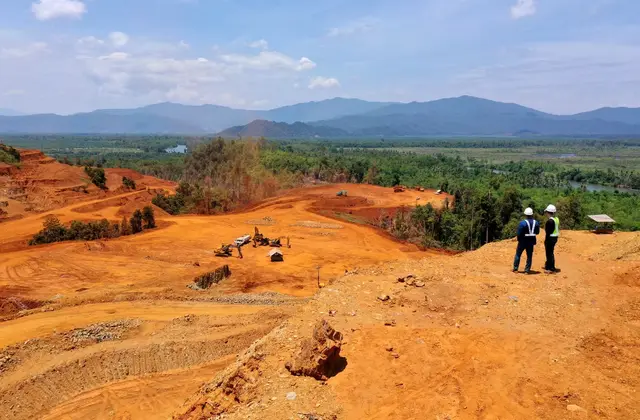
Support staff at a site are often assumed to be easier to hire than operators. In practice, many leave not because they lack ability but because they are not ready to live away from family, with limited signal and an on-site and off-site schedule. An administrator who excels in a city office can struggle in a quiet, tightly structured environment.
This piece is part of the broader mining recruitment guide, focused on administration, logistics, and engineering staff at the site. We cover how to read readiness from a CV, the questions that reveal rotation fit, and the mistakes that waste mobilization cost on candidates who end up not staying.
Challenges
Readiness for remote living rarely shows on a CV
A CV shows skills, not the ability to adapt to a mess, limited signal, and distance from family. This needs to be drawn out with specific questions early on, not left until the candidate arrives on site.
Support roles demand a high level of independence
At a site, one staff member often holds several duties at once with limited supervision. A candidate used to the help of many colleagues in a city office can be overwhelmed, so independence should be assessed explicitly.
Mobilization is expensive if a candidate quits quickly
Travel, accommodation, and induction all cost money. A candidate who leaves after a few weeks multiplies the loss, so a rotation mismatch is better surfaced before the offer is sent.
From a pile of CVs to a shortlist
Illustrated flow: CVs come in, are screened against your criteria, and only the most relevant candidates move on to the next stage.
The old way
- Site staff applications are mixed in with head office applications, so readiness for a remote posting is never separated out as a criterion.
- Interviewers ask about rotation readiness briefly at the end, and stock answers such as ready to be posted anywhere are accepted at face value.
- Details about the mess, signal, and on-site and off-site schedule are explained only after the offer, when the candidate has already turned it down.
With TalentRank
- Define a rubric for each site role in Custom Hiring Criteria: technical skills, remote experience, independence, and rotation readiness.
- CV Screening AI ranks applicants and summarizes work experience at sites, remote projects, or similar environments.
- WhatsApp Prescreening explains the location and rotation pattern, then collects the candidate's answers on readiness and family situation.
- AI Interview explores independent work and adaptation scenarios, then HR reviews the scores and summaries before the offer.
CV screening criteria for site staff in mining recruitment
For site staff, technical skill is only half the assessment. The five criteria below bring in posting readiness, the factor that most often decides whether a candidate stays after mobilization.
| Criterion | Priority | Good signs in the CV | Worth asking about |
|---|---|---|---|
| Work experience at a site or remote project | High | Has worked at a mine, plantation, oil and gas site, or remote project with a rotation system, with the length of each posting clearly stated. | All experience is in big-city offices, with no explanation of how the candidate would adapt to a remote location. |
| Skills fitting an administration, logistics, or engineering role | High | Names the systems, documents, or software they know, for example warehousing, procurement, planning, or production reporting. | Skills are written generically, such as proficient in computers, with no examples of work they completed. |
| Rotation readiness and family situation | High | The candidate understands the on-site and off-site pattern, and their status and their family's views have been discussed honestly from the prescreening stage. | Only learns about the rotation pattern when asked, or says they are ready without thinking through the impact on their family. |
| Accuracy and tidiness with documents | Medium | The CV is neat and chronologically consistent, and the candidate can explain the record-keeping system used in a previous job. | Employment dates overlap, job titles change without explanation, or the candidate cannot explain the records they kept. |
| Independence and ability to work unsupervised | Medium | Has held full responsibility for a function with limited supervision, and can name results they delivered on their own. | Always says the work was done by the team with no clear personal role, or waits for direction on routine matters. |
Work experience at a site or remote project
HighGood signs in the CV: Has worked at a mine, plantation, oil and gas site, or remote project with a rotation system, with the length of each posting clearly stated.
Worth asking about: All experience is in big-city offices, with no explanation of how the candidate would adapt to a remote location.
Skills fitting an administration, logistics, or engineering role
HighGood signs in the CV: Names the systems, documents, or software they know, for example warehousing, procurement, planning, or production reporting.
Worth asking about: Skills are written generically, such as proficient in computers, with no examples of work they completed.
Rotation readiness and family situation
HighGood signs in the CV: The candidate understands the on-site and off-site pattern, and their status and their family's views have been discussed honestly from the prescreening stage.
Worth asking about: Only learns about the rotation pattern when asked, or says they are ready without thinking through the impact on their family.
Accuracy and tidiness with documents
MediumGood signs in the CV: The CV is neat and chronologically consistent, and the candidate can explain the record-keeping system used in a previous job.
Worth asking about: Employment dates overlap, job titles change without explanation, or the candidate cannot explain the records they kept.
Independence and ability to work unsupervised
MediumGood signs in the CV: Has held full responsibility for a function with limited supervision, and can name results they delivered on their own.
Worth asking about: Always says the work was done by the team with no clear personal role, or waits for direction on routine matters.
Sample interview questions for remote mine site staff
These two groups of questions explore readiness for life on site and independent working style. A specific, honest answer about concerns is more useful than a perfect answer that sounds rehearsed.
Posting and rotation readiness
1.What worries you most about working at a remote site on a rotation pattern?
A good answer: An honest candidate names real concerns that can be discussed, rather than answering that they are ready without thinking it through.
2.How would you stay in touch with your family when the signal is limited?
A good answer: Shows whether the candidate has thought about the practical issues that often trigger resignations.
3.What do you do on your days off while you are in the mess?
A good answer: Reveals how they manage free time and loneliness at a remote location.
Independence and working style
4.Tell me about a time you had to solve an administrative or stock problem without being able to reach your manager.
A good answer: Shows the ability to make independent decisions within the limits of their authority.
5.How do you make sure stock data or documents stay accurate when work piles up?
A good answer: Tests record-keeping discipline, which is key in site logistics and administration.
6.What do you do if a field worker asks for items outside the issuing procedure?
A good answer: Assesses firmness in holding to procedure under pressure from colleagues in the field.
Common mistakes
- 01
Accepting the answer ready to be posted anywhere
This stock answer almost always comes from candidates who want to get through. Probe with concrete questions about the mess, signal, and family so the real concerns surface before the offer.
- 02
Explaining site conditions after the offer
Location, accommodation, and rotation pattern details should be shared at prescreening. A candidate who withdraws early saves mobilization cost and HR team time.
- 03
Using the same criteria for head office and site staff
Head office criteria emphasize skills and communication. Site staff also need independence and resilience for remote living, so the two rubrics should be kept separate.
- 04
Ignoring the candidate's family's views
Family objections are often the main reason people leave early. Ask politely whether the family knows about and accepts the rotation pattern, without pressing the candidate to reveal anything too personal.
Scenario
Company
A mineral mining company at a remote location looking for administration staff, logistics staff, and planning staff for its site.
Situation
Many applications come from big cities with tidy CVs, but in the previous hiring round several staff left after mobilization. HR wants posting readiness checked earlier.
Expected outcome
Offers go to candidates who already understand site conditions and the rotation pattern, so the risk of leaving after mobilization is easier to anticipate.
- 1HR builds a site staff rubric that weights remote experience and rotation readiness heavily.
- 2CV Screening AI ranks applicants and summarizes experience on remote projects or locations.
- 3WhatsApp Prescreening explains the location and rotation pattern, then collects readiness answers from the top candidates.
- 4AI Interview explores independence and adaptation, then HR reviews the summaries before sending an offer.
What you get
- Candidate ranking per site role
- Summary of remote work experience
- Answers on rotation and posting readiness
- Independence interview scores for HR