
Logistics recruitment: high application volume, tight deadlines
Logistics companies rarely hire just one person. Before year-end, during online shopping promos, or when a new distribution contract starts, HR has to fill dozens of driver, courier and warehouse roles within weeks. Vacancies posted on job boards and social media bring in a flood of applications, many without a proper CV and sent over WhatsApp.
On the other side, a bad logistics hire shows up fast: lost or misdelivered parcels, damaged vehicles, accidents in the warehouse. Selection cannot simply reward whoever applies first. This page covers the roles, CV criteria, interview questions and screening flow that logistics HR teams can use to protect quality when volume rises.
Challenges
Sudden, seasonal spikes in headcount
A new contract or an online shopping season pushes manpower needs up quickly, then drops them again. An HR team used to a handful of applications suddenly has to read hundreds of files without adding people.
Many applications in inconsistent formats
Driver and warehouse applicants often send photos of their national ID (KTP), driver's license (SIM) and diploma over WhatsApp with no CV. Data scattered across many chats is hard to compare, so good applicants slip through unnoticed.
Licenses and driving records are slow to check
License class, expiry date and violation history decide who can safely drive a company vehicle. Checking them one by one while the applicant queue grows is slow and easy to get wrong.
Applicants who live far from the hub and quit early
Workers who live far from the warehouse or delivery point usually struggle with attendance and resign easily. Training money is wasted and operations has to start over.
The logistics roles hired most often
Logistics hiring centers on the people who move, store and record goods. Each role carries different risks, so each needs a different assessment focus. One shared screening form will not work.
- 1
Delivery driver
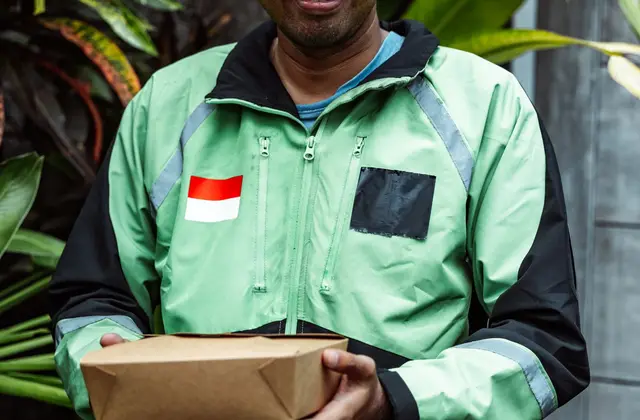
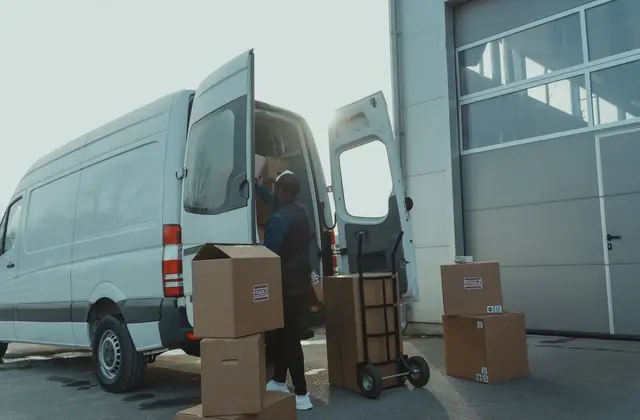
Assessed on whether the license class matches the vehicle, driving record, knowledge of routes and service areas, and honesty in handling goods and cash collections.
- 2
Last mile courier
Assessed on address reading, manner when meeting recipients, comfort with delivery apps, and consistency in completing daily routes.
- 3
Warehouse staff and picker packer
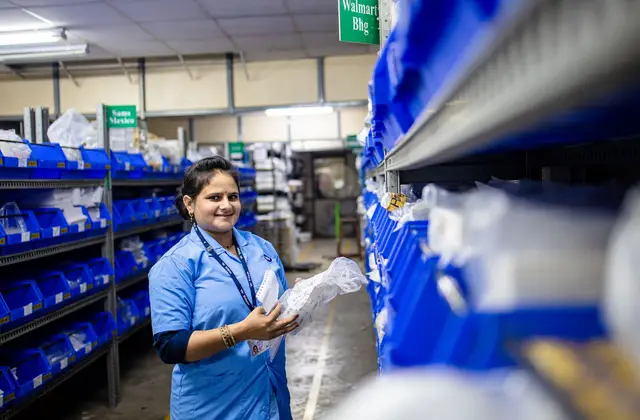
Assessed on accuracy in matching goods to documents, stamina for standing and lifting, and the habit of following safety procedures.
- 4
Forklift operator
Assessed on a relevant SIO (equipment operator license) or operator certificate, experience on the same type of equipment, and discipline with traffic rules inside the warehouse.
- 5
Operations admin and dispatcher
Assessed on accuracy of shipment data entry, ability to schedule the fleet, composure when deliveries run late, and communication with drivers.
From a pile of CVs to a shortlist
Illustrated flow: CVs come in, are screened against your criteria, and only the most relevant candidates move on to the next stage.
The old way
- A vacancy opens, applications arrive by email, job boards and WhatsApp chat, and HR opens each document photo one by one.
- HR phones applicants one at a time to ask about home location, license type and willingness to work shifts, often repeating the same questions.
- Applicants who look suitable are called in for walk-in interviews, and some turn out to miss the basic requirements, wasting operations team time.
With TalentRank
- Set the criteria for each role in Custom Hiring Criteria, for example license type, home area and warehouse experience, then upload all CVs to CV Screening AI.
- Collect basic information such as home location, license type and shift availability through WhatsApp Prescreening before anyone is called in.
- Run AI Interview with questions you define for the applicants who pass, then review their answers, scores and summaries.
- The HR team reads the ranking and candidate summaries, checks the original documents, and decides who moves to the next stage.
CV screening criteria for logistics recruitment
Logistics CVs are usually short, so the useful signals sit in small details: license type, where the person lives, how long they stayed in past jobs. Here are six criteria you can use as a starting rubric before tailoring it to each role.
| Criterion | Priority | Good signs in the CV | Worth asking about |
|---|---|---|---|
| SIM (driver's license) matches the vehicle to be driven | High | The license class is stated clearly and fits the vehicle, such as motorcycle, box van or truck, and it has not expired. | No license mentioned, the class does not fit the role, or the applicant promises to get the license after being hired. |
| Lives near the hub or service area | High | The address is in a district near the warehouse or delivery point, and the applicant describes their own commute route. | Lives out of town with no plan to relocate, or resigned from a previous job because of distance. |
| Honesty and track record handling goods | High | A clear work history with a former supervisor who can be reached, and willingness to have references and a police clearance certificate (SKCK) checked if asked. | Unexplained gaps in work history, reluctance to give reference contacts, or leaving a past job over a goods or cash discrepancy. |
| Logistics operations experience | Medium | Has worked in freight, warehousing, retail or distribution, with specific duties listed rather than just a job title. | Experience is only a company name with no duties, or the person switches fields very often with no pattern. |
| Job stability and tenure | Medium | Several past jobs lasted a reasonable time, or the moves have sensible reasons such as a project contract ending. | Almost every job was short, especially with similar reasons such as targets or working hours. |
| Physical readiness and K3 (occupational safety) compliance | High | Willing to take a medical checkup, understands wearing safety shoes and a vest, and has attended basic safety training. | Refuses a medical checkup, calls safety rules an obstacle to work, or hides a history of workplace accidents. |
SIM (driver's license) matches the vehicle to be driven
HighGood signs in the CV: The license class is stated clearly and fits the vehicle, such as motorcycle, box van or truck, and it has not expired.
Worth asking about: No license mentioned, the class does not fit the role, or the applicant promises to get the license after being hired.
Lives near the hub or service area
HighGood signs in the CV: The address is in a district near the warehouse or delivery point, and the applicant describes their own commute route.
Worth asking about: Lives out of town with no plan to relocate, or resigned from a previous job because of distance.
Honesty and track record handling goods
HighGood signs in the CV: A clear work history with a former supervisor who can be reached, and willingness to have references and a police clearance certificate (SKCK) checked if asked.
Worth asking about: Unexplained gaps in work history, reluctance to give reference contacts, or leaving a past job over a goods or cash discrepancy.
Logistics operations experience
MediumGood signs in the CV: Has worked in freight, warehousing, retail or distribution, with specific duties listed rather than just a job title.
Worth asking about: Experience is only a company name with no duties, or the person switches fields very often with no pattern.
Job stability and tenure
MediumGood signs in the CV: Several past jobs lasted a reasonable time, or the moves have sensible reasons such as a project contract ending.
Worth asking about: Almost every job was short, especially with similar reasons such as targets or working hours.
Physical readiness and K3 (occupational safety) compliance
HighGood signs in the CV: Willing to take a medical checkup, understands wearing safety shoes and a vest, and has attended basic safety training.
Worth asking about: Refuses a medical checkup, calls safety rules an obstacle to work, or hides a history of workplace accidents.
Sample interview questions for logistics recruitment
These questions are grouped by the main risks in logistics. A human interviewer can use them, or they can serve as the basis for AI Interview, then be adapted to the role you are hiring for.
Safety and compliance
1.Tell me about a time you nearly had an accident on the road or in the warehouse. What did you do afterwards?
A good answer: Shows whether the applicant is honest about incidents and learns from them, rather than just claiming to be always safe.
2.If a supervisor asks you to get a shipment out faster in a way that breaks safety rules, what do you do?
A good answer: Tests the nerve to refuse a risky instruction and how politely they do it.
3.What safety equipment did you wear in your last job, and when did you take it off?
A good answer: A specific answer points to real habits. A textbook answer with no examples deserves more probing.
Accuracy and honesty
4.Have you ever found a goods or cash discrepancy while on duty? How did you report it?
A good answer: Reveals their attitude toward small discrepancies and whether they report before being asked.
5.How do you make sure a parcel you hand over really reaches the right recipient?
A good answer: Explores whether they check the name and address, and how they handle a recipient who is not there.
6.What do you do if you find damaged goods before delivery?
A good answer: Shows whether they report it, document it, or stay quiet and let the problem move on to the customer.
Availability and schedule
7.Are you ready to work weekends, holidays or overtime when volume is high?
A good answer: Sets working-hour expectations at the start, so there is no pushback after the contract begins.
8.How long is your commute to the work site, and what vehicle do you use?
A good answer: Gauges lateness risk and checks that the home location on the CV is accurate.
9.How do you manage your time when today's route is longer than usual?
A good answer: Shows whether they can prioritize and warn the dispatcher before they run late.
Common mistakes
- 01
Using one standard for every role
Drivers, pickers and admins get the same form. The result is that licenses are checked for everyone while data accuracy is never tested for admin candidates.
- 02
Leaving the license check until the first day
An applicant with the wrong license class is only discovered when the vehicle is ready to go. Ask for the license class at prescreening, then verify the original document before the job offer.
- 03
Ignoring the distance from home to the hub
Candidates who live far away often accept an offer just to get started, then leave within weeks. Distance and daily transport costs should be discussed openly before the offer.
- 04
Hiring in a rush with no backup candidates
When a spike arrives, HR only then starts searching. Keep a list of qualified candidates from previous periods, with assessment notes, so you do not start from zero each season.
- 05
Not testing honesty with real situations
A general question like 'Are you honest?' always gets a yes. Use incident-based questions, such as a goods discrepancy or wrong change, then compare the answers with reference check results.
Scenario
Company
A regional freight company with several transit warehouses and a fleet of motorcycles and box vans, facing the year-end shopping season.
Situation
An HR team of only three people has to add couriers and warehouse staff within a few weeks, while applications arrive through job boards and WhatsApp groups in no consistent format.
Expected outcome
HR spends face-to-face time only on candidates who already meet the basic requirements, and the hub head receives a shortlist with consistent assessment notes.
- 1HR builds a rubric for three roles in Custom Hiring Criteria, covering license class, home area and warehouse experience.
- 2All collected CVs and files are uploaded to CV Screening AI, then applicants who meet the basic requirements are contacted through WhatsApp Prescreening.
- 3Applicants who answer fully go through AI Interview, with questions on safety, honesty and shift availability.
- 4HR reviews the summaries and scores, verifies the original documents, then invites the selected candidates to an in-person interview with the hub head.
What you get
- Candidate ranking per role based on your rubric
- CV summary and prescreening answers
- AI Interview scores and summaries
- Candidate list for HR review