
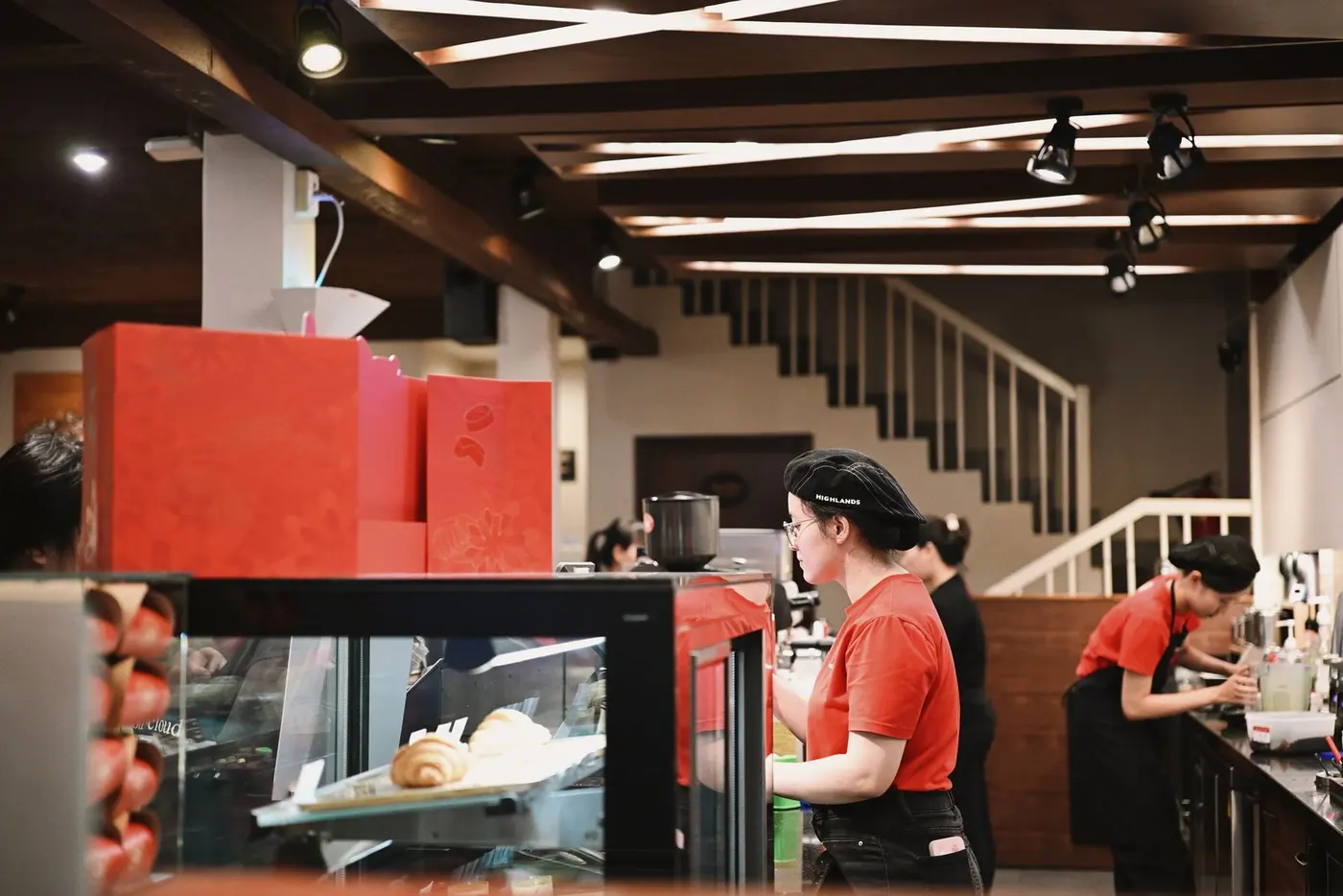
Retail and F&B hiring that never stops
In retail and F&B, openings are almost always live. Staff leave, new outlets open, and extra hands are needed on weekends or during the holidays. HR screens many people for similar roles while outlet managers wait for new staff as soon as possible.
Candidates for these roles are rarely chosen for their degrees. What gets noticed is a service attitude, willingness to work when others are off, schedule fit, and honesty with money. Because the volume is high, the selection process has to be simple, consistent across outlets, and still leave room to assess character.
Challenges
High turnover keeps openings permanently live
Frequent staff changes make HR start the process over again and again. Without a consistent rubric, screening quality goes up and down, and the reasons people leave are never recognized as a pattern.
Placement across many outlets with different needs
Outlets in malls, shophouses, and office areas have different peak hours and customer profiles. A candidate has to suit a specific outlet's location and schedule, not just pass a general screening.
Service attitude is hard to judge from a CV
Friendliness and patience with customers barely show up in a written document. Yet this is the factor most felt in an outlet, and assessing it tends to be subjective when there are no standard questions.
Readiness for shifts, weekends, and holidays
Candidates often say they can do any schedule, then resign after a few weeks because the hours are heavy. Expectations about working hours need to be discussed honestly from the start of selection.
From a pile of CVs to a shortlist
Illustrated flow: CVs come in, are screened against your criteria, and only the most relevant candidates move on to the next stage.
The old way
- Receiving applications through various channels, with outlet managers and HR forwarding CVs to each other manually
- Contacting candidates one by one to ask about location, schedule, and customer service experience
- Holding interviews at the outlet with different questions depending on who is interviewing
With TalentRank
- Set up Custom Hiring Criteria for each role, such as cashier, barista, and sales associate, including schedule and location requirements
- Upload CVs to CV Screening AI so candidates are ranked by how well they match the criteria
- Send questions via WhatsApp Prescreening on place of residence, weekend shift availability, and previous experience
- Use AI Interview with standard questions on service and honesty, then review the scores and summaries before the in-person interview at the outlet
CV screening criteria for retail and F&B staff
Because many applicants don't yet have long work histories, this rubric treats attitude and job readiness as equally important as work history. Adjust the weights to the role: cashiers emphasize accuracy with money, baristas emphasize technical skill.
| Criterion | Priority | Good signs in the CV | Worth asking about |
|---|---|---|---|
| Direct customer service experience | High | Has worked as a cashier, sales associate, server, barista, or another role that faces customers directly, including volunteer activities or a family business. | No experience dealing with people at all and no substitute activity mentioned. Not a reason to reject, but their attitude needs to be explored in the interview. |
| Readiness for shifts, weekends, and holidays | High | States explicitly that they can work the outlet's schedule, and their work history shows experience with irregular hours. | Currently studying or holding another job with a conflicting schedule that isn't mentioned. Confirm the schedule before inviting the candidate. |
| Residence relative to the outlet | High | Lives near the target outlet or within easy reach of public transport, which lowers the risk of lateness and of quitting because of distance. | Lives far from every outlet with an opening and no clear reason, or no residence information at all. |
| Accuracy with cash and transactions | Medium | Has operated a cash register or POS app, closed out a till, and is used to counting change and reconciling deposits. | Has had cash shortage problems that weren't reasonably explained, or a history of leaving abruptly from jobs involving money. |
| Technical skills for the role | Medium | For baristas: familiarity with an espresso machine and serving standards. For sales associates: product knowledge and display arrangement. Backed by training or experience they can describe. | Claims technical experience but can't name the equipment or procedures used. A short practical test at the outlet interview is enough. |
| Job stability and tendency to stay | Medium | Has stayed a reasonable time in one place, or has a plausible reason for leaving, such as a contract ending or moving house. | A string of jobs that ended quickly with no explanation. Ask the reason for each move and what they would need in order to stay at a new workplace. |
Direct customer service experience
HighGood signs in the CV: Has worked as a cashier, sales associate, server, barista, or another role that faces customers directly, including volunteer activities or a family business.
Worth asking about: No experience dealing with people at all and no substitute activity mentioned. Not a reason to reject, but their attitude needs to be explored in the interview.
Readiness for shifts, weekends, and holidays
HighGood signs in the CV: States explicitly that they can work the outlet's schedule, and their work history shows experience with irregular hours.
Worth asking about: Currently studying or holding another job with a conflicting schedule that isn't mentioned. Confirm the schedule before inviting the candidate.
Residence relative to the outlet
HighGood signs in the CV: Lives near the target outlet or within easy reach of public transport, which lowers the risk of lateness and of quitting because of distance.
Worth asking about: Lives far from every outlet with an opening and no clear reason, or no residence information at all.
Accuracy with cash and transactions
MediumGood signs in the CV: Has operated a cash register or POS app, closed out a till, and is used to counting change and reconciling deposits.
Worth asking about: Has had cash shortage problems that weren't reasonably explained, or a history of leaving abruptly from jobs involving money.
Technical skills for the role
MediumGood signs in the CV: For baristas: familiarity with an espresso machine and serving standards. For sales associates: product knowledge and display arrangement. Backed by training or experience they can describe.
Worth asking about: Claims technical experience but can't name the equipment or procedures used. A short practical test at the outlet interview is enough.
Job stability and tendency to stay
MediumGood signs in the CV: Has stayed a reasonable time in one place, or has a plausible reason for leaving, such as a contract ending or moving house.
Worth asking about: A string of jobs that ended quickly with no explanation. Ask the reason for each move and what they would need in order to stay at a new workplace.
Interview questions for cashiers, baristas, and sales associates
Interview questions for retail and F&B staff work best when they are real situations from the outlet. Use the same questions for every applicant to a similar role so assessments are consistent across outlets.
Customer service attitude
1.Tell me about a time you served an angry or disappointed customer. What did you say and do?
A good answer: A good answer shows listening first, not answering with emotion, and looking for a solution or escalating to a superior when needed.
2.How do you greet a customer who has just walked in when the outlet is busy and you are serving someone else?
A good answer: An attentive applicant still acknowledges the new customer, for example with a short greeting, then finishes the service already under way.
3.In your view, what makes a customer want to come back to a shop or cafe?
A good answer: A specific answer, such as remembering a name or an order, shows the applicant notices the customer experience, not just completing the transaction.
Honesty and accuracy with money
4.What do you do if, at till close, the cash is short or over compared with the sales record?
A good answer: A good answer recounts, traces transactions, then reports honestly to the supervisor. Covering the difference with personal money without reporting it should be noted.
5.If a customer receives too much change and doesn't notice, what do you do?
A good answer: An honest applicant corrects it on the spot or reports it per procedure. Notice whether the answer sounds spontaneous or overly rehearsed.
6.Has a coworker ever asked you to give a friend a discount or freebie without permission? How did you respond?
A good answer: A good answer declines politely and explains the rules. It shows the nerve to hold to procedure under pressure from a colleague.
Shift readiness and teamwork
7.Our outlet is open late and busy on weekends. What would you need to arrange to stay consistent with this schedule?
A good answer: A realistic answer mentions transport home, classes, or family obligations. An applicant who is frank about constraints is easier to schedule.
8.Tell me about a time you had to cover for a coworker who didn't show up in the middle of a busy day. What did you do?
A good answer: A cooperative applicant is willing to help, sets priorities, and communicates with the team. Notice whether they complain excessively about the fatigue.
9.What makes you most likely to stay at, or leave, a workplace with a packed schedule?
A good answer: Gives a hint to what causes people to quit, such as schedule, boss, or pay, so HR can judge whether the outlet can meet it.
Common mistakes
- 01
Screening only by formal CV standards
Many retail and F&B candidates are experienced but have short CVs. Rejecting them purely over format means good candidates slip through. Also weigh service experience, schedule readiness, and attitude in the interview.
- 02
Not being honest about shift and weekend load
Hiding a heavy schedule to attract applicants raises the first-month quit rate. Be open about shift patterns, overtime, and days off from prescreening, so the people who continue are genuinely able to.
- 03
Interview questions that differ by outlet manager
If each manager asks different things, comparing candidates is unfair. Agree on one set of core questions and a scoring rubric, then leave room for extra outlet-specific questions.
- 04
Ignoring how well a candidate's location fits the outlet
A candidate who passes but lives far from the outlet tends to be late or quit. Record residence from the start and offer placement at the nearest outlet, not only the outlet with the greatest need.
- 05
Not studying the pattern of why staff leave
Turnover that is treated as normal makes the same problems repeat. Record the reason for leaving and the outlet of origin, then use the findings to improve selection criteria, schedules, or how the role is explained during recruitment.
Scenario
Company
A coffee shop chain with several outlets in malls and office areas, about to open a new outlet.
Situation
The company needs to hire baristas and cashiers for the new outlet while still filling vacancies at existing ones. A small HR team receives applications from social media and WhatsApp, against a fixed opening date.
Expected outcome
The outlet manager meets candidates who already fit on schedule and location, so the in-person session is used to assess attitude and practical skills.
- 1HR creates criteria for baristas and cashiers, including weekend shift requirements and the target outlet.
- 2CVs and applicant data are collected in CV Screening AI and ranked against the criteria for each role.
- 3WhatsApp Prescreening asks top candidates about residence, schedule availability, and service experience.
- 4Suitable candidates take AI Interview with questions on service and honesty with money, then HR and the outlet manager review the summaries before a practical session at the outlet.
What you get
- Candidate ranking for each retail or F&B role
- A summary of each candidate's service experience and schedule readiness
- WhatsApp prescreening answers on residence and shift availability
- AI Interview scores and summaries that are consistent across all outlets