
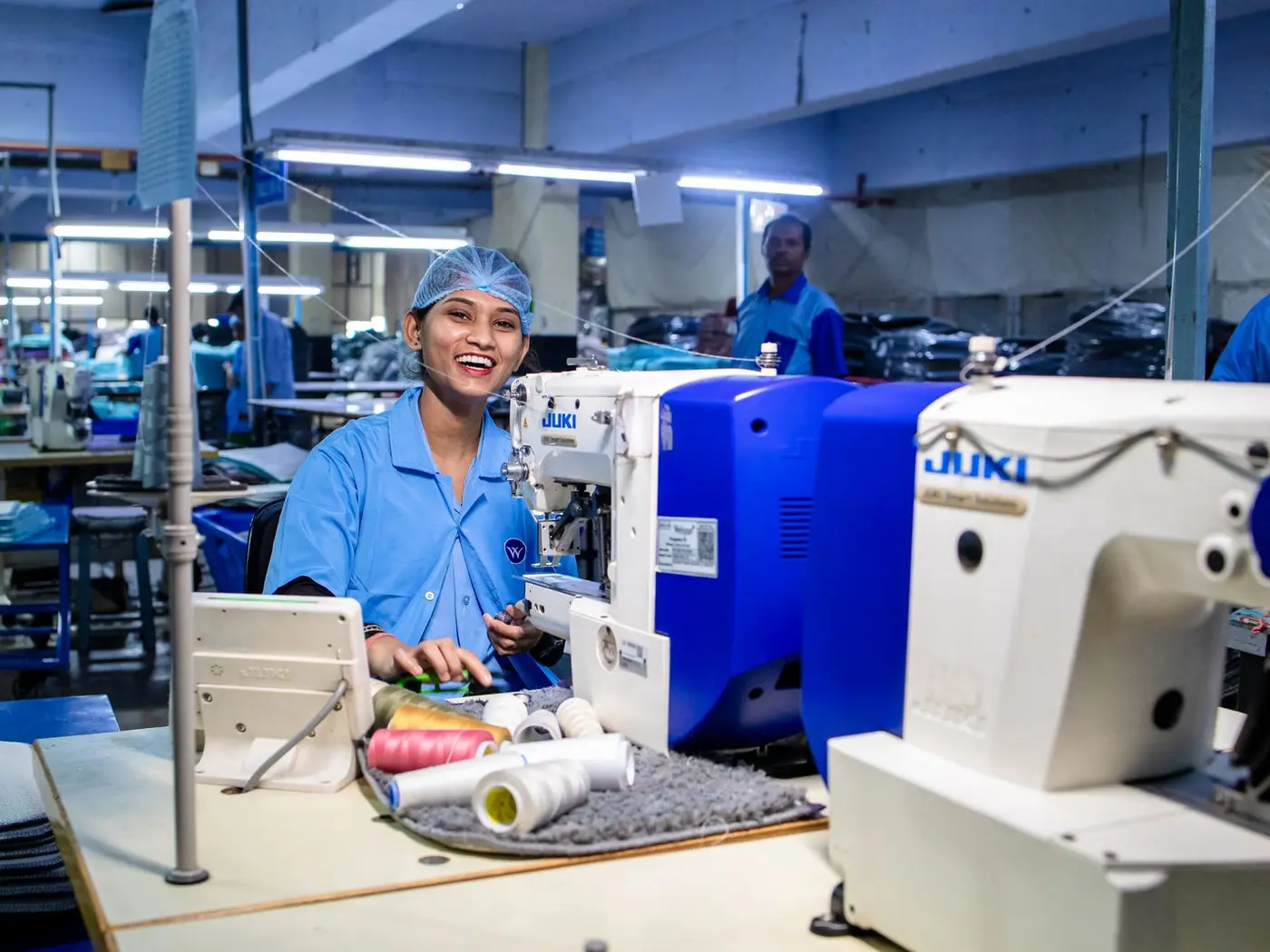
The challenge of recruiting production operators in large numbers
Opening a dozen or dozens of operator positions at once changes the nature of HR work. It is no longer about picking the best from a few applicants, but about screening hundreds of people by the same rules in a short time. Without written criteria, each CV reader uses their own standard, and the results are hard to defend when the production head asks questions.
This topic is part of the broader manufacturing recruitment guide. The focus here is narrow: how to structure a high-volume production operator hiring flow so it is fast, without letting through people who cannot meet the shift schedule, live out of reach, or are not ready for repetitive work across a full shift.
Challenges
One set of criteria, many readers
When several HR staff split a pile of CVs, assessments tend to differ. One person emphasizes experience, another the diploma. Without a shared rubric, two candidates with the same profile can meet different fates depending on who opens their file.
Key information is not in the CV
An operator CV is usually one page and rarely mentions willingness to work nights, living situation, or the reason for leaving. This information has to be collected through extra questions before HR spends time calling or inviting candidates.
Candidates do not show up when called
Of the candidates invited to walk-in interviews, some do not come or arrive without documents. Every wasted invitation takes up an interview slot and leaves the production team waiting, so invitations should go only to those who pass the basic requirements.
From a pile of CVs to a shortlist
Illustrated flow: CVs come in, are screened against your criteria, and only the most relevant candidates move on to the next stage.
The old way
- All CVs are opened manually and marked with colored highlighters or a personal spreadsheet column.
- HR phones candidates one by one to ask about shift and home location.
- Candidates are scheduled for walk-in interviews in large numbers without a clear filter.
With TalentRank
- Set the operator rubric in Custom Hiring Criteria: shift, home location, work history, and process experience.
- Upload all CVs to CV Screening AI to get a ranking and a summary for each candidate.
- Send WhatsApp Prescreening to top-ranked candidates to confirm shift, location, and document readiness.
- Run a short AI Interview, then HR reviews scores and summaries before scheduling the practical test.
CV screening criteria for production operator recruitment
At high volume, criteria must be few enough to stay consistent and sharp enough to tell candidates apart. The five criteria below can serve as a starting rubric, then be calibrated once you see who stays and who leaves.
| Criterion | Priority | Good signs in the CV | Worth asking about |
|---|---|---|---|
| Willingness to rotate shifts | High | The candidate explicitly agrees to work all applicable shifts, including nights, and does not request schedule restrictions without a clear reason. | Gives a vague answer about the night shift, or asks for a fixed schedule that is not available for the position. |
| Distance and daily transport | High | Lives near the plant, or the candidate describes a realistic way of getting there, including for the morning shift start and the night shift finish. | Lives far away with no transport plan, or the answer keeps changing when asked how they would get to the site. |
| Length of service and reason for leaving | Medium | Tenure at previous jobs is reasonable for the role, and reasons for leaving, such as end of contract, relocation, or development, can be explained. | A string of very short stints in a row with different reasons that cannot be explained. |
| Experience in similar processes | Medium | Names specific processes such as packing, assembling, or operating a particular machine that come close to the line at your plant. | Writes only 'factory experience' without naming the process, product, or machine they handled. |
| Readiness for repetitive work | High | Has worked at a repetitive pace and standing for long periods, and is willing to provide a health certificate or MCU (medical check-up). Check the current rules that apply in your company. | Only objects to the demands of the position, such as long standing hours or hourly targets, after being offered the job. |
Willingness to rotate shifts
HighGood signs in the CV: The candidate explicitly agrees to work all applicable shifts, including nights, and does not request schedule restrictions without a clear reason.
Worth asking about: Gives a vague answer about the night shift, or asks for a fixed schedule that is not available for the position.
Distance and daily transport
HighGood signs in the CV: Lives near the plant, or the candidate describes a realistic way of getting there, including for the morning shift start and the night shift finish.
Worth asking about: Lives far away with no transport plan, or the answer keeps changing when asked how they would get to the site.
Length of service and reason for leaving
MediumGood signs in the CV: Tenure at previous jobs is reasonable for the role, and reasons for leaving, such as end of contract, relocation, or development, can be explained.
Worth asking about: A string of very short stints in a row with different reasons that cannot be explained.
Experience in similar processes
MediumGood signs in the CV: Names specific processes such as packing, assembling, or operating a particular machine that come close to the line at your plant.
Worth asking about: Writes only 'factory experience' without naming the process, product, or machine they handled.
Readiness for repetitive work
HighGood signs in the CV: Has worked at a repetitive pace and standing for long periods, and is willing to provide a health certificate or MCU (medical check-up). Check the current rules that apply in your company.
Worth asking about: Only objects to the demands of the position, such as long standing hours or hourly targets, after being offered the job.
Interview questions for high-volume production operator recruitment
At high volume, interview questions need to be uniform so scores can be compared across candidates. The two groups below are short enough for prescreening or an initial interview, and every answer can be scored with the same rubric.
Availability and commitment
1.If we put you on the night shift next week, what would you need to arrange?
A good answer: A concrete answer signals the candidate is genuinely ready. A hesitant one usually means they have not thought about it.
2.How long do you plan to work at one plant, and what would keep you there?
A good answer: Measures long-term expectations and motivation, without expecting a rehearsed answer.
3.What is the earliest you could start if hired, and which documents are already ready?
A good answer: Screens administrative readiness so mass onboarding is not held up by paperwork.
How they work on the production line
4.Walk me through one working day on your last line, from arrival to going home.
A good answer: Specific detail separates real experience from CV claims, without needing a complicated technical question.
5.How do you stay accurate when doing the same task for hours?
A good answer: Shows how the candidate keeps focus and whether they check their own output during repetitive work.
6.What would you do if the shift target fell behind because a machine stopped?
A good answer: Shows whether the candidate reports to a supervisor or takes shortcuts that put quality and safety at risk.
Common mistakes
- 01
Calling in every applicant without prescreening
Mass invitations feel fast, but they create a long queue of candidates who do not meet the basic requirements. Screen shift, home location, and documents first, then invite only those who pass to an interview or practical test.
- 02
Reading CVs without a written rubric
Without a rubric, judgment drifts through the day: candidates early in the pile are marked harder or softer than those at the end. Write down the criteria and their weights before the first read.
- 03
Asking about living situation too late
Distance discovered only after the contract means HR repeats the hiring a few months later. Ask about the transport plan in prescreening, in a neutral tone and with a clear reason.
- 04
Treating the score as the final decision
Scores and rankings help sort, but they do not capture attitude during the practical test. Use screening results to decide who gets tested further, and let HR and the production head make the decision.
Scenario
Company
A packaged food processing plant that needs extra operators for two new shifts.
Situation
The opening was shared across several channels and applications arrived faster than the HR team could read them. The production head asked for candidates who can work the night shift and live not far from the plant.
Expected outcome
The interview queue at the plant becomes shorter and more relevant, so the production head evaluates candidates who are genuinely ready to start on the new shifts.
- 1HR writes the operator rubric together with the production head, with shift and home location as the main criteria.
- 2Incoming CVs are uploaded to CV Screening AI to be ranked against that rubric.
- 3Top candidates are asked about shift, location, and documents through WhatsApp Prescreening.
- 4HR reviews the AI Interview summaries and scores, then invites selected candidates to a practical test on the line.
What you get
- Operator ranking per rubric
- CV summary for each candidate
- WhatsApp prescreening answers
- Interview scores and summaries